
CHURCH ORGANIZATION (Part 2) Elders The Overseers
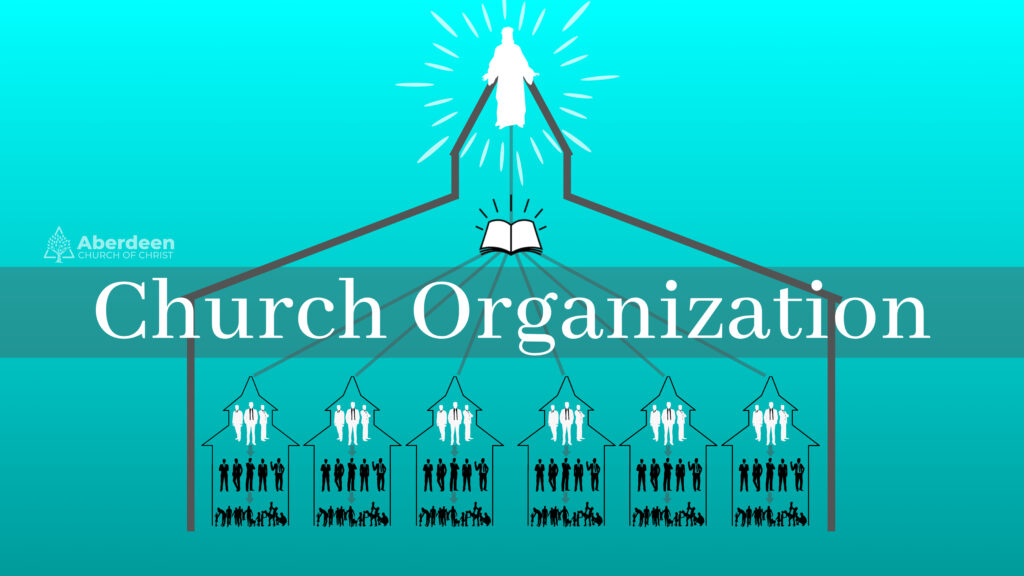
As established previously, Christ has sole authority in the church, which is His kingdom (Matt. 16:18-19; Eph. 1:20-23). As head over all things to the church, Christ alone dictates the operation and organization (John 15:1-2). We should not go to anyone other than Jesus and the inspired writers of the New Testament to learn the organization of the church (Col. 1:18).
Furthermore, Christ never gave authority for His church to be divided into personalized versions of what He established in the first century (Eph. 4:4-6). It was Jesus’ desire that all His followers be one in His church (John 17:20-21). This universal church was NOT allowed to teach different doctrines under several different hierarchies and names. Paul explains:
Now I beseech you, brethren, by the name of our Lord Jesus Christ, that ye all speak the same thing, and that there be no divisions among you; but that ye be perfectly joined together in the same mind and in the same judgment.
1 Corinthians 1:10
Christ condemns religious divisions or denominationalism. Since Christ condemned religious division, the true followers should seek to be one with Christ’s original church.
The Authority and Ordination of Elders
After Christ left the world physically, He left the Holy Spirit to reveal the ordination of the eldership.
Take heed therefore unto yourselves, and to all the flock, over the which the Holy Ghost hath made you overseers, to feed the church of God, which he hath purchased with his own blood.
Acts 20:28
Christ knew that “grievous wolves” would seek to devour His flock after His ascension, so Christ left overseers to warn and protect the flock, which is His church (Acts 20:29). If churches are not built according to this oversight, they will be rooted up and left vulnerable to the wolves of the world (Matt. 7:15; 15:13).
The first century followed the admonition of Christ through the leadership of the apostles. The church ordained elders in EVERY congregation.
And when they had ordained them elders in every church, and had prayed with fasting, they commended them to the Lord, on whom they believed.
Acts 14:23
The elders were charged by the Holy Spirit to be the “overseers” meaning those that protect, feed, and watch the souls of the members in the immediate congregation in which they rule (Heb. 13:17; Acts 20:17, 28). Churches today are not right if they do not ordain elders as the overseers of the church. None are over the elders, except Christ and the Word (1 Thess. 5:12-13; Heb. 13:7).
When Paul told Titus to set the churches in Crete in order, Paul commanded that elders be established (Titus 1:5). The churches may have a period after a group of Christians first start to assemble in a local area when they have yet to ordain or find qualified men. While this is understandable, these congregations are still considered “wanting” and not “set in order” until they have ordained elders to oversee the church.
The Name and Number of Elders
Each local church in each city was to get their own set of elders (Titus 1:5; Acts 20:17; Phil. 1:1). There was no central overseeing group of elders that possessed authority over all the churches and other elders. This authority rested only with Christ and the Word (1 Cor. 4:6). Moreover, each church ordained a plurality of elders (Titus 1:5, Acts 20:17; Phil. 1:1; James 5:14; Heb. 11:2). There is no authority or mention in the New Testament of a congregation under the rule of one elder.
Additionally, it should be noted that the terms “bishop”, “elder”, “overseer”, refer to the same office (Acts 20:28; Titus 1:5-7). The terms are used interchangeably by the Holy Spirit. Christians will also hear the term “pastor” or “shepherd” used in reference to the elders. Originally the term “pastor” was synonymous with shepherd. One that tended the sheep and tended the pastures of the sheep was called a “pastor” that is “one who is of the pastures.” One that oversaw the sheep and herded the sheep was called a “shepherd [sheep-herd].” This stands as the origins of the words according to Strong’s Hebrew and Greek Lexicon.1 The inspired writers of the New Testament used the Greek term poimēn [poy-mane’] to mean “shepherd” or “pastor” (Eph. 4:11). There are several extensions of this word such as arch-poimēn, which is “head shepherd” or Jesus Christ (1 Peter 5:4). The verb form of poimēn (pastor/shepherd) is poimainō [poy-mah’ee-no], which is translated “feed” or “rule” (Acts 20:28; 1 Peter 5:2).2 The job of the pastor is to feed the flock. This was the instruction given to the pastors by Peter in 1 Peter 5:1-4.
The job of the pastor and the job of the elders are the same according to Peter; he uses the terms interchangeably (1 Peter 5:1-4). Peter by inspiration uses the verb form of “pastor” [poimainō] in describing the duties of the elders as “overseers.”3 Peter wrote:
The elders which are among you I exhort, who am also an elder, and a witness of the sufferings of Christ, and also a partaker of the glory that shall be revealed: Feed [poimainō, which is to do the job of a pastor] the flock of God which is among you, taking the oversight thereof…
1 Peter 5:1-2
The office and duty of the pastor and elder are the same as Peter thus explained.
The Qualifications of Elders
Paul describes the qualifications of those that seek this lofty office. Not just anyone can be an elder, the individual must fit Christ’s pre-established requirements before the church can rightfully ordain the candidate. Consider what Paul wrote about the conditions of the office to all the churches:
If any be blameless, the husband of one wife, having faithful children not accused of riot or unruly. For a bishop must be blameless, as the steward of God; not selfwilled, not soon angry, not given to wine, no striker, not given to filthy lucre; But a lover of hospitality, a lover of good men, sober, just, holy, temperate; Holding fast the faithful word as he hath been taught, that he may be able by sound doctrine both to exhort and to convince the gainsayers.
Titus 1:6-9
This is a true saying, If a man desire the office of a bishop, he desireth a good work. A bishop then must be blameless, the husband of one wife, vigilant, sober, of good behaviour, given to hospitality, apt to teach; Not given to wine, no striker, not greedy of filthy lucre; but patient, not a brawler, not covetous; One that ruleth well his own house, having his children in subjection with all gravity; (For if a man know not how to rule his own house, how shall he take care of the church of God?) Not a novice, lest being lifted up with pride he fall into the condemnation of the devil. Moreover he must have a good report of them which are without; lest he fall into reproach and the snare of the devil.
1 Timothy 3:1-7
Let’s take a closer look at these qualifications:
- “If a man desire the office” – The first prerequisite is the desire. Those that desire the office is to “desireth a good work.” A man is not going to be a good elder if he doesn’t want to do it.
- “A bishop then must be…” – The verb “be” here is einai [I-nigh], which is in the present tense.4 Biblically, God wants his elders to meet all these qualifications presently and at the same time. – I have seen elders installed who had no children and when I asked about it, members just simply said, “Well, he will have them eventually.” You must presently meet the qualifications to be eligible.
- “blameless” – This means not giving people a creditable reason to dismiss his example and leadership. If there is a creditable accusation, or many members doubt that he meets the qualifications, then he should not be an elder.
- “the husband of one wife” – Anyone who has worked in ministry knows the value of a wife! She is an irreplaceable help to any church leader! Notice that it does not say, “married only once.” Some people take this too far to say that an elder cannot be one who has been married, lawfully, twice. If a spouse has died and the man marries again, he is still the husband of one wife (Rom. 7:1-3). This qualification simply means that the elder needs to have a biblically lawful marriage. If an elder has a wife who passes away, he is no longer the husband of one wife, he no longer meets the qualities needed to be an elder. – It should go without saying that this disqualifies women to be elders. Sadly, there is some debate on this point, but the church has yet to find a woman who can be the husband of one wife.
- “vigilant” – An elder should be a part of the lives of the members enough to see when there is a problem. A man cannot be watchful and vigilant if he is not involved in the lives of the members.
- “sober, of good behavior” – All meaning that the man needs to have self-discipline over his actions and a mind to set a Christlike example, being able to examine himself and buffet his body. This echoes what Paul said in Titus 1:8: “…a lover of good men, sober, just, holy, temperate.”
- “given to hospitality” – A man that can help the weary traveler. One that takes joy in feeding and clothing those in need. A man willing to take in a person who is lost either in their home or giving them a place to sleep for the night, like the good Samaritan.
- “apt to teach” – One that is knowledgeable of the scriptures and willing to give earthly and spiritual help to those that need it. If a man can’t set down and have a Bible study with someone, then he doesn’t need to be an elder! This goes in line with what Paul says in Titus 1:9: “Holding fast the faithful word as he hath been taught, that he may be able by sound doctrine both to exhort and to convince the gainsayers.”
- “Not given to wine” – Someone who doesn’t drink alcohol. An elder must have a clear head and be able to make good decisions when a church emergency arises. A person who is known to be a drinker is not reliable.
- “no striker” – A man that is not quick to anger. One that doesn’t respond quickly with hateful and snide comments. Someone who doesn’t have a chip on his shoulder.
- “not greedy of filthy lucre” – It’s not a good idea to put someone in charge of the church treasury who has a problem with greed or someone who wants to be an elder just so he can be in charge of the money.
- “but patient, not a brawler, not covetous” – (“but” meaning the opposite of the other three). The qualities of a patient person opposite the qualities of a drinker. The opposite of a striker is one that is not a brawler, a man able to handle situations gently and with tact. One that is content with what he has and not constantly wanting what he doesn’t.
- “One that ruleth well his own house, having his children in subjection with all gravity; (For if a man know not how to rule his own house, how shall he take care of the church of God?)” – All one qualification. One that knows how to oversee and lead well his children. If a man has unruly children who will not behave then he doesn’t need to be an elder. Notice the qualification specifies to his “own house” those family members that are not under “his own house” is not under his rule and therefore not relevant. You cannot judge a ruler based on someone that is no longer under his house rule.
- “Not a novice, lest being lifted up with pride he fall into the condemnation of the devil.” – Young men are more prone to pride and ambition in the church trying to make a name for themselves, than mature and seasoned men that have already made a sound reputation for themselves in the church.
- “he must have a good report of them which are without; lest he fall into reproach and the snare of the devil” – One who is not going to hurt the reputation of the church by being out in the world. An elder is a man that knows how to protect the reputation of the church both walking in the church and in the world.
Members are a Christian so long as they behave like one. So long as members follow the law of God, and continually meet the qualifications that make them a Christian, then they remain a faithful brother/sister. – The same is true for elders. When a man no longer, presently, meets the qualifications, then he is not qualified. If at one time he did meet the qualifications, but presently he does not meet the qualifications, then it is time to step down. It is a biblical principle seen in all aspects of the Bible, that you are only in a godly role, so long as you meet God’s requirements for that role.
Ultimately…
…elders are worthy of great honor and respect in the lives of Christians. Paul proclaims that the elders who rule well are worth of “double honor” because they “labour in the word and doctrine” (1 Tim. 5:17). They watch and tend to the growth and protection of the souls of the church members.
Obey them that have the rule over you, and submit yourselves: for they watch for your souls, as they that must give account, that they may do it with joy, and not with grief: for that is unprofitable for you.
Hebrews 13:17
Christians should love and respect their elders and do whatever possible to make their heavy labor easier. In the end, they will receive a greater condemnation and judgment than the flock if they fail (James 3:1).
- James Strong. “poimainō“. Strong’s Greek and Hebrew Lexicon. blueletterbible.org. https://www.blueletterbible.org/lexicon/g4165/kjv/tr/0-1/ ↩︎
- Ibid. ↩︎
- Ibid. “1 Peter 5:2”. https://www.blueletterbible.org/kjv/1pe/5/2/t_conc_1156002 ↩︎
- Ibid. “einai“. https://www.blueletterbible.org/kjv/1ti/3/2/t_conc_1122002 ↩︎
- “According to the history of the ‘Church of Christ,’ God used certain men to ‘restore’ the New Testament Church in the early 1800’s. Where was the true New Testament church before then? Jesus said that the gates of hell would not prevail against His church (Matthew 16:18). What happened to the church and where was the truth it was responsible for preaching before God restored it?”
- “Does the Church of Christ believe there is a rapture, or do we believe there’s two raptures or even one at all? I’m reading different things.”
- “What is the book of Enoch mentioned in Jude 1:14 and why is it not in the Bible?”
- “There is no story of Jesus from like 12 to His 30s. Why is that?”
- “Is it wrong to act gay or do gay things if you are not gay? Can a man wear a dress for fun or dress up as a drag queen? They may not be gay, but they are doing gay things.”