
CHURCH ORGANIZATION (Part 3) Deacons the Servants
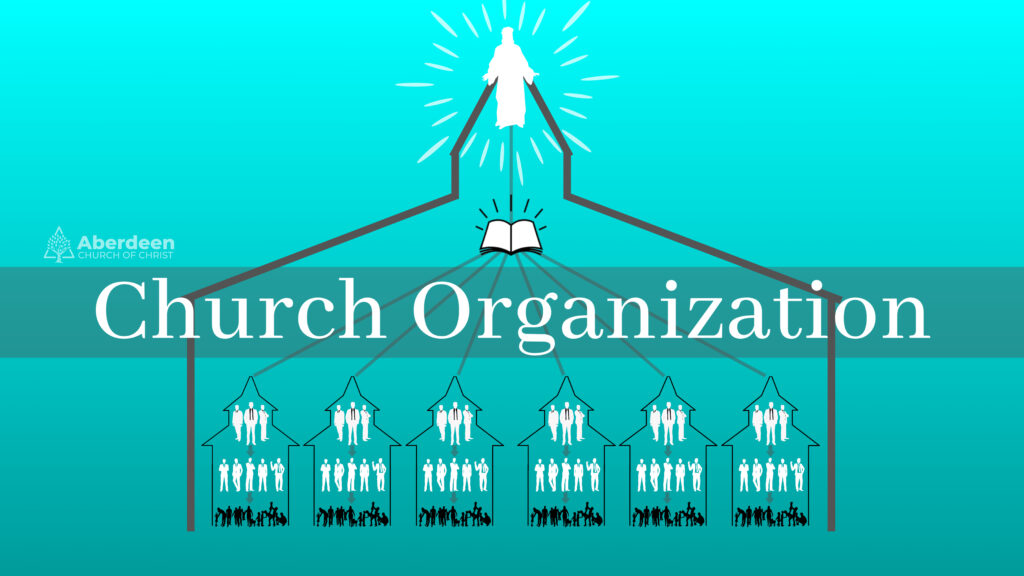
Christ possesses the sole authority in the church, being the head of the kingdom (Matt. 16:18,19; Eph. 1:20-23). Christ appointed elders to be overseers of the local congregations that make up the universal church (Acts 20:28; Heb. 13:7, 17). Every church in the Lord’s kingdom should be organized with elders to shepherd and protect the church (1 Tim. 3:1-7). Christ further commanded the church to be organized with another office, deacons. The churches of the first century were organized with elders and deacons (Phil. 1:1).
What Is a Deacon?
Deacons hold an office based in service, “…let them serve as deacons…” (1 Tim. 3:10). This is a special position in the church with biblical qualifications and with distinct responsibilities, that being a servant to the local congregation. The term “deacon” comes from the Greek word diakonos which means “servant” (Strong’s Greek Lexicon). A deacon serves as an attendant to the church, a servant, those who tend to the errands, a minister. All of these characteristics can be discerned from the study of the word “deacon.” As the deacons are not overseers or rulers, yet they hold an office of the church they fall under the authority of the elders but hold more authority than the average member in the church.
It should be noted that the word “deacon” is used in two different ways in the Bible. The word is used in the generic sense of the meaning, “servant,” and then it is used in reference to the church office. Not every time the word diakonos appears in Scripture does it mean the church office. Romans 15:8 calls Jesus Christ a diakonos. Christ is the head of the church; he is not a deacon in the church office sense of the word. However, Christ is a servant to the church (Phil. 2:5-7). Paul the apostle called himself a diakonos (translated “minister”) in Colossians 1:23. However, Paul was not a deacon of a local congregation. He was an apostle, missionary, and preacher, but Paul did not hold the office of a deacon in the local church. Paul calls Phebe a diakonos of the church, but she, being a woman, did not meet the qualifications of the office mentioned in 1 Timothy 3:8-12, which will be discussed shortly. Just because a person is called a diakonos, does not mean that the individual holds the office of a deacon.
Understand that while a “deacon” is an office, the term should be considered more of a description—servant—rather than a title. Far too often men get so caught up with titles and their ‘area/territory’ that the work never gets done or things get bogged down. A true deacon is one that serves and seeks no credit or preeminence in the church (James 4:10).
The Use of Deacons
The use and place of a deacon began shortly after the establishment of the church in Acts 2 on the Day of Pentecost. As soon as the church began, murmuring began as well. Some of the members were complaining to the apostles that the widows of their people were being neglected in the daily ministry. The complainers wanted the apostles to stop what they were doing and give certain widows their attention and direct ministry. The apostles explained that it was not advantageous for the church for them to stop their work and “serve tables,” so they told the church to appoint 7 men of honest report and full of the Holy Spirit. Thus, began the office of the deacon (Acts 6:1-6).
And in those days, when the number of the disciples was multiplied, there arose a murmuring of the Grecians against the Hebrews, because their widows were neglected in the daily ministration. Then the twelve called the multitude of the disciples unto them, and said, It is not reason that we should leave the word of God, and serve tables. Wherefore, brethren, look ye out among you seven men of honest report, full of the Holy Ghost and wisdom, whom we may appoint over this business. But we will give ourselves continually to prayer, and to the ministry of the word. And the saying pleased the whole multitude: and they chose Stephen, a man full of faith and of the Holy Ghost, and Philip, and Prochorus, and Nicanor, and Timon, and Parmenas, and Nicolas a proselyte of Antioch: Whom they set before the apostles: and when they had prayed, they laid their hands on them.
Acts 6:1-6
While this is one example of the use of deacons, a necessary inference dictates that deacons are charged to relieve the elders and preachers in matters that would distract them from discharging the responsibility of caring for the spiritual needs of church members. Deacons tend to the daily ministry of the church and are often entrusted with such tasks as the building maintenance, subbing for class teachers, audio/visual booth operation, security measures during the worship, grounds keeping, supplying the teaching and worship materials, church events, and so much more. Deacons are essential to the functionality of the church in protecting the elders from being overburdened.
The Qualification of Deacons
Christ requires that those who serve as deacons meet certain qualifications. Paul provides a scriptural list of these qualifications.
Likewise must the deacons be grave, not doubletongued, not given to much wine, not greedy of filthy lucre; Holding the mystery of the faith in a pure conscience. And let these also first be proved; then let them use the office of a deacon, being found blameless. Even so must their wives be grave, not slanderers, sober, faithful in all things. Let the deacons be the husbands of one wife, ruling their children and their own houses well. For they that have used the office of a deacon well purchase to themselves a good degree, and great boldness in the faith which is in Christ Jesus
1 Timothy 3:8-13
Let’s take a closer look as these requirements.
- “grave” – This means that a deacon must be honest in nature, not one typically associated with lying or mistrust. Such as was the qualification mentioned in Acts 6:3: “…look ye out among you seven men of honest report…”
- “not doubletongued” – Saying one thing with one person and saying something else to another person (with the intent to deceive). A deacons must stand for the truth of the Scripture rather than be inclined to just tell people what they want to hear. In the very least, they should direct people to those who can explain the truth through the Bible.
- “not given to much wine” – This phrase has given Christians much debate over the years. Some think this gives license for deacons to drink alcohol, but not “much wine.” However, for those who have studied hermeneutics (i.e. the art of biblical interpretation) or logic it should not present a problem. An action forbidden in the extreme doesn’t then validate the same action to a lesser degree, one of the tenets of biblical interpretation. Just because deacons are forbidden from drinking “much” doesn’t mean they can drink a little. Any simple word search of this phrase will show that this tenet is taught in many logic classes as a principle related to logical fallacies (https://www.google.com/search?q=An+action+forbidden+in+the+extreme+doesn%E2%80%99t+then+validate+the+same+action+to+a+lesser+extreme&rlz=1C1VDKB_enUS1119US1119&oq=An+action+forbidden+in+the+extreme+doesn%E2%80%99t+then+validate+the+same+action+to+a+lesser+extreme&gs_lcrp=EgZjaHJvbWUyBggAEEUYOTIHCAEQIRiPAjIHCAIQIRiPAtIBBzk1N2owajeoAgCwAgA&sourceid=chrome&ie=UTF-8). A deacon is under the same obligation as an elder in terms of alcoholic beverages. Deacons are not to allow their judgment to be compromised by alcohol. They are required to stay away from strong drink unless the situation falls under a biblical exception (1 Tim. 5:23).
- “not greedy of filthy lucre” – One that is not easily tempted to steal or defraud the church. It is not uncommon for deacons to be entrusted with money. A deacon that is known to be a thief should not be entrusted with the church’s money.
- “Holding the mystery of the faith in a pure conscience” – He should hold firmly the great doctrines of the Christian faith. The word “faith” here, is synonymous with “the gospel.” The reason is obvious. Though not a preacher, yet his influence and example would be great, and a man who held material error ought not to be in office.
- “And let these also first be proved” – Individuals that have proven themselves in the church to be known for these qualifications. The church should well acquainted with these men and trust these men to meet these credentials.
- “being found blameless” – There should be no credible reason or reasonable accusation brought before the church as to why such a man should not serve in office.
- “the husbands of one wife” – The candidate must be married. It should go without saying from this qualification why deacons must be men from this statement. Biblically, “husbands” are always men. The church should not ordain a woman as the “husband of one wife.” The idea is ridiculous.
- “ruling their children and their own houses well” – A deacon should have children and those children should be consider individuals of good behavior. A deacon should be the head of his family and lead his family with all godly benevolence and instruction.
- “their wives be grave, not slanderers, sober, faithful in all things” – The deacons must have a wife who lives the image of Christ in all faithfulness. One who will support her husband and support the work of the church.
The final verse (1 Tim. 3:13) requires that the deacons hold these qualifications well throughout their time in office. They should not hold them temporarily and then expect to stay in office. The deacons should serve in all respect and dignity that their office represents. They should be bold and confident in their work of the church, retaining their office with great joy.
Ultimately…
Deacons are the congregation’s image of the workman. They exemplify the true work and character of the servant of Christ (1 Cor. 4:1). When people see the deacons they see the work of the church. Essentially, deacons are the “proved” servants of the church (1 Tim. 3:10). They are men who have proven themselves to be reliable, honest, and sound in the faith. They are essential to the functionality of the local church.